
LinkHug
Role
Product Designer
Timeline
February - May 2024
Methods
Skills
The Solution
The Impact
90%
100%
63%
Research with target users
32 quantitative surveys with entry-level fashion design students
Here's what I found: There is a clear mandate for a specialized ecosystem; students are digitally active but professionally underserved by current general-purpose platforms.
76%
search for fashion opportunities online only
90%
never found a fashion-specific job platform
82%
rated finding fashion jobs 4–5 out of 5 for difficulty
5 in-depth interviews · 40 min each
The fashion job search is broken in three ways: platform don't show brand identity, openings aren't clear, and access depends on who you know than how skilled you are.

Pain point #1
Visual brand identity is absent from job descriptions, scattering the research process across platforms.
Pain point #2
Job descriptions are vague, incomplete, or never posted.
Pain point #3
Opportunities go to connections, not candidates.
Understanding the hiring side · finding the root of the pain
When talking with people from the hiring sides, I start to debug the reason why students don't see the opportunity, here is the exact quote:
“When we have or know openings, there is not a very commonly-known portal to send out this information for brand owners, so the position is usually quickly filled by people we know.”

Fashion brand owner

Senior director, career development & experience of The New School
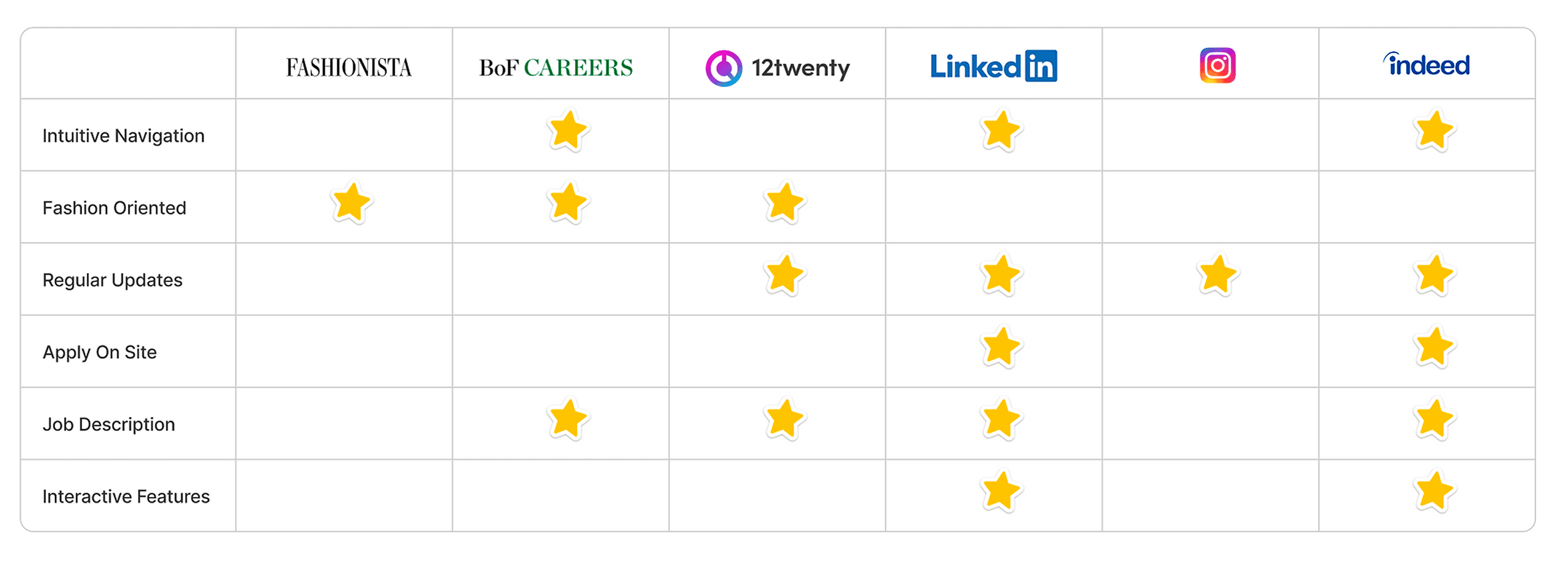
Competitive analysis · what falls short in current designs
Fashion platforms prioritize relevance but lack usability. Mainstream platforms deliver usability but overlook fashion-specific needs.
Synthesis: From Voices to Insights
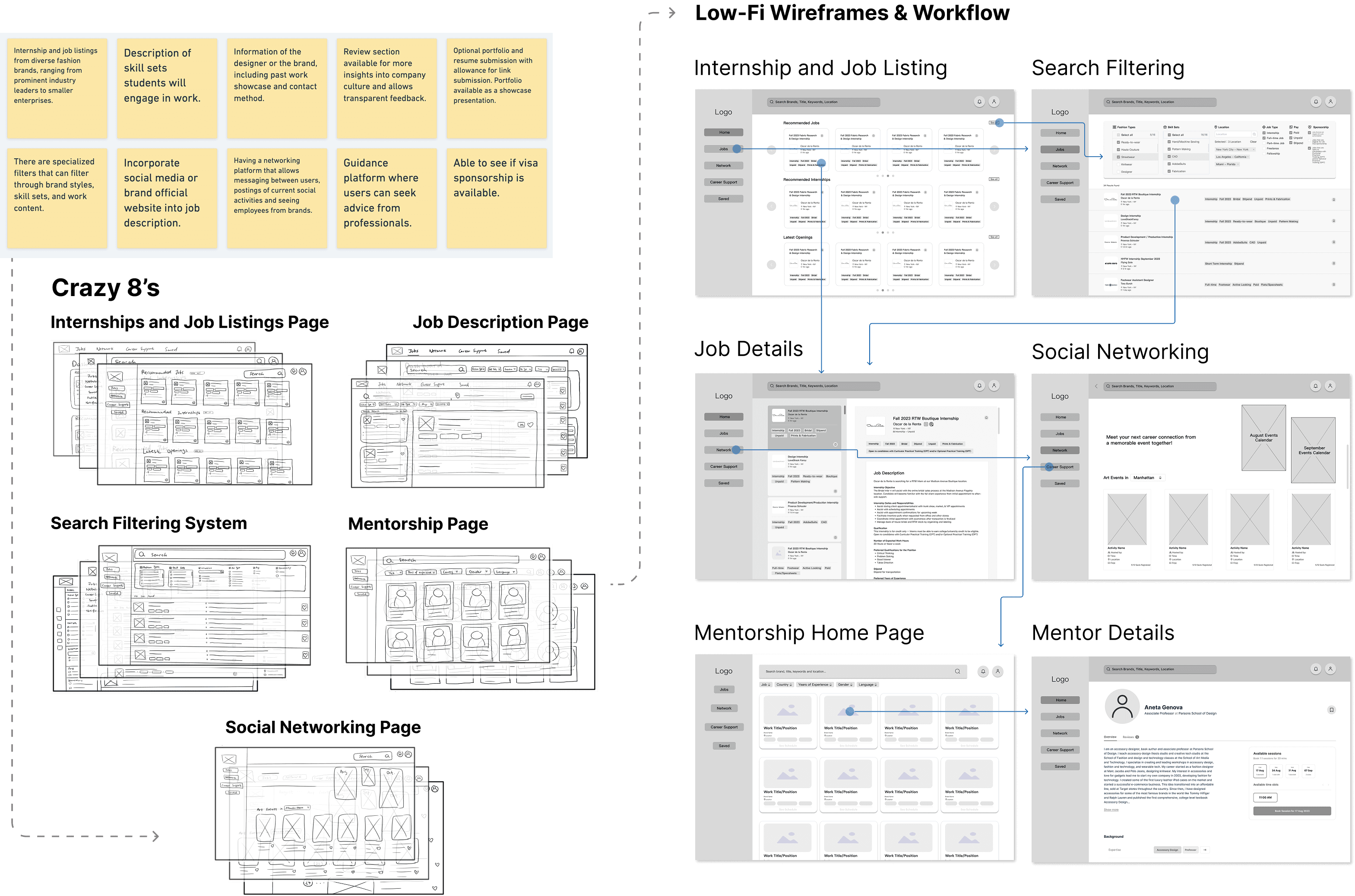
Students need four things the current system doesn't give them: honest reviews, fashion-fit filters, real networks, and clear information about who they're applying to.
Review System
Students desire effective review system to know former employees’ insights of the company culture and personal work experience.
Filter System
A filter system that’s tailored to fashion industry. Evaluate compatibility based on brand style, skills requirements, type of work interns will engage in.
Networking Platforms
Networking platforms play a pivotal role for creatives, enabling them to cultivate professional connections that open doors to a multitude of work opportunities.
Information & Transparency
Students value contact information for the HR recipient, and a brief overview of the brand’s portfolio
How might we
Many design iterations and user testings to get to the right design


Design system
Primary Colors • A blue-led palette built for clarity at scale

Tag Palettes • Background & text pairs

Typography • Inter

Final Design
Key feature #1
Tailored filtering system
Filters built for fashion hiring: specializations, skill seta, sponsorship offering, and work format.
The specificity general platforms don't offer but essential for designers.

Key feature #2
Brand identity, built into the profile
Instagram, AI summaries, and reviews come together in one view, giving applicants the full brand picture without leaving the platform, reducing search drop-off.
Key feature #3
Real connections that open doors
Local fashion events and direct mentor booking turn networking from cold outreach into real access, helping students build the relationships that actually open doors.
The Final Look
LinkHug is the platform fashion students have never had. One place to find the right opportunities, understand brands before applying, and connect with the people who can open doors.
Reflection
What this project taught me, in a few honest notes.
Niche design demands depth
The best products aren't general — they're specific, and that specificity is what makes them feel made for someone.
Understand user needs
Design decisions start feeling like natural answers when I really understand user needs.
Design the system, not the screens
Thinking beyond the user pushed me to design for the whole ecosystem, not just one screen.
