
Role
Product Designer
Timeline
February - May 2 Weeks
(2025.Oct.7-21)
Tools
Figma
Figjam
Skills
Product Management
User Research
UI Design
Prototype
Usability Testing
The Problem
One-third of all NYC online purchases are returned, yet the return experience has not kept pace with delivery. Shoppers are managing separate apps, separate trips, and separate time slots for a task they never wanted to do in the first place.
The Solution
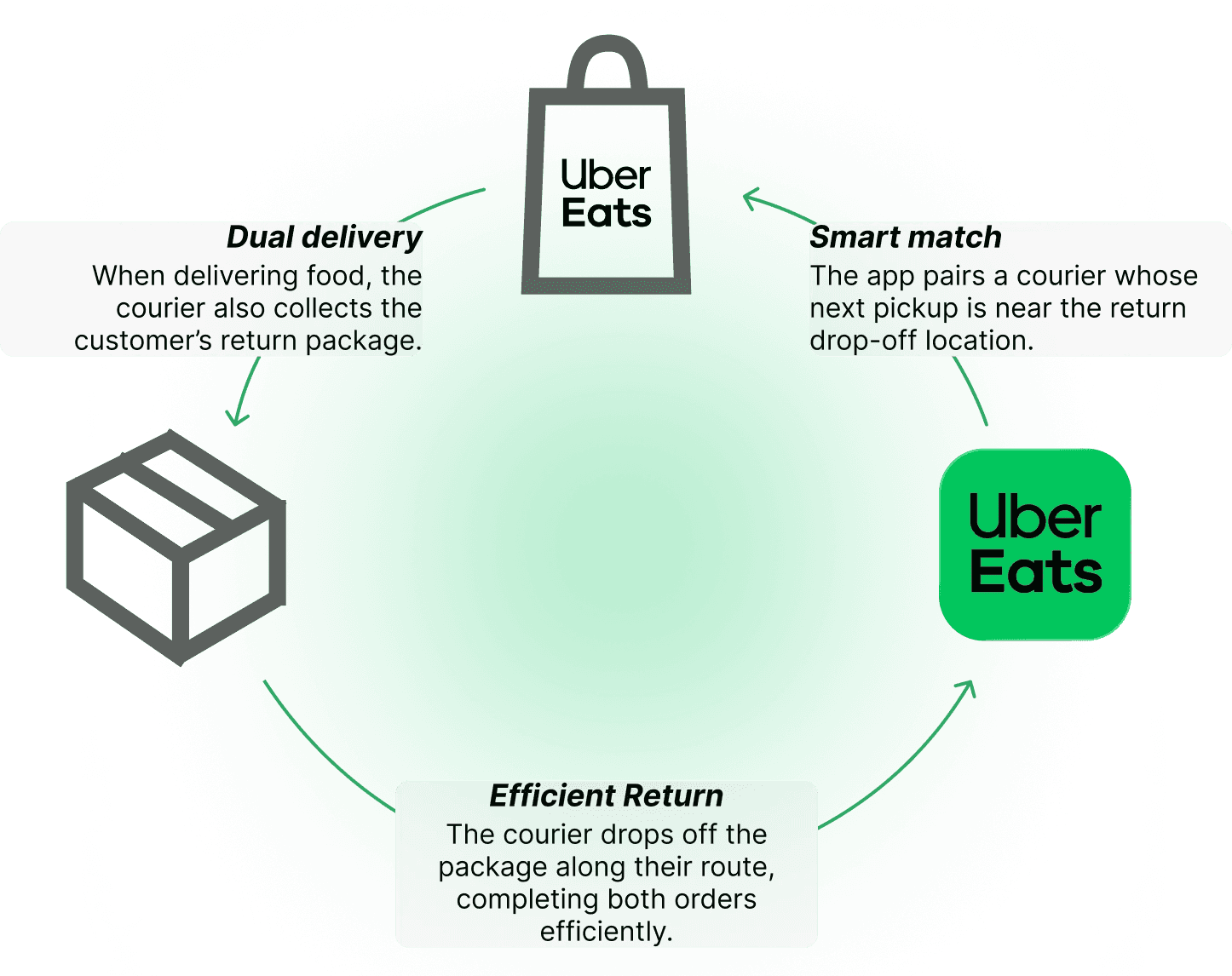
Uber Eats Package Return integrates package pickups into existing delivery routes. Couriers pick up your return on the way to your door, turning a separate errand into a seamless part of a route that was already happening.
FINAL DESIGN
Enjoy your meal, skip the return.
As your Uber Eats courier delivers your order, they take care of your package return—saving you the hassle of visiting drop-off locations.
→ Order
→ Add return info
→ Exchange food and package
→ Return completed!
As simple as that.
No surprises on price
For manually set locations, the price is confirmed before being added to your total.
Enjoy the ease
One stop, twice the convenience.

Easy purchase, easy return
Return your Amazon packages directly through Uber Eats—combining Amazon’s free return policy with Uber Eats delivery convenience.
A feature designed for those who want to return items with minimal effort and maximum ease.
Research
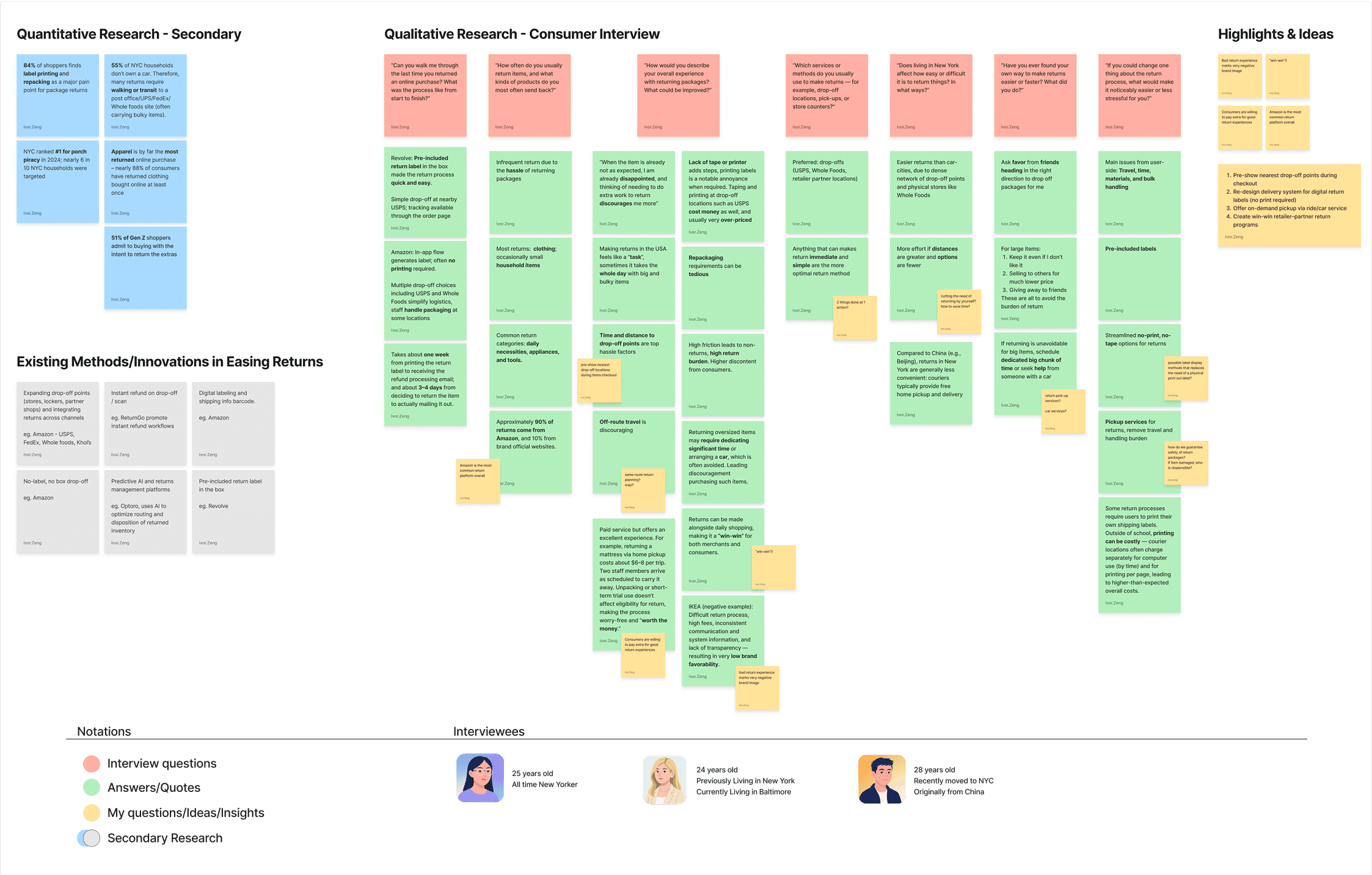
Interviews with New York shoppers, secondary data, and analysis of existing return methods.
DISCOVERY#1: PAIN POINT
“Returns Are a Major Hassle”
Users view returns as a burdensome task due to travel distance, time spent, and material requirements like packaging and label printing. The lack of convenience often discourages users from returning items altogether.
DISCOVERY#2: OPPORTUNITY
A Single Low-Friction Return Feature Can Transform Experience From Bad to Good
Pre-included labels, print-free QR codes, and nearby drop-off points significantly reduce friction, making returns quick and predictable.
DISCOVERY#3: DEAL BREAKER
“Win-Win” Value
Collaborations like Amazon and Whole Foods show how user ease can align with business benefit—improving both revenue and brand trust. Many users are even willing to pay extra for effortless pickup or same-route drop-off options that save time.
HOW MIGHT WE
make the package return experience feel as effortless as receiving a delivery?
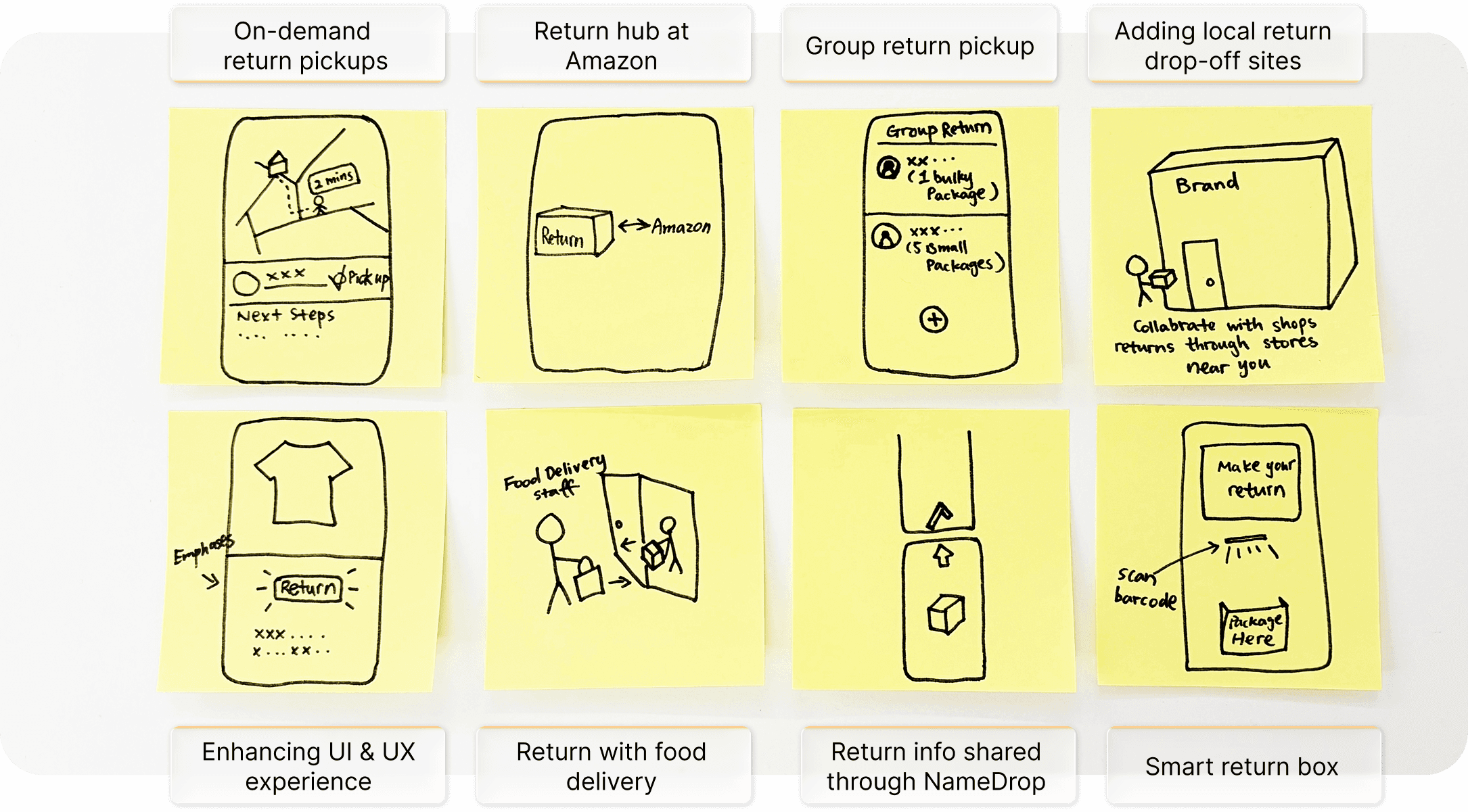
CRAZY 8'S
SOLUTION CONCEPT
Package return with Uber Eats
RETURN TO RESEARCH: UNDERSTANDING STAKEHOLDER
Interview with Uber Eats Delivery Courier
From my interview with an Uber Eats courier, I learned that integrating package returns into food delivery routes is operationally feasible and financially attractive to couriers. Returns can be easily paired with existing routes, increasing earning opportunities without significantly adding workload.
When asked whether he would accept return pickups if paid fairly, he responded:
A: “Yes. Uber Eats offers two options for couriers: accept or cancel an order. The more hours you stay active—typically around 30 to 35 per week—the more delivery opportunities and income you earn. Last time I did Uber Courier package return, I earned $55 total—$29 for delivery and $26 for the return.”
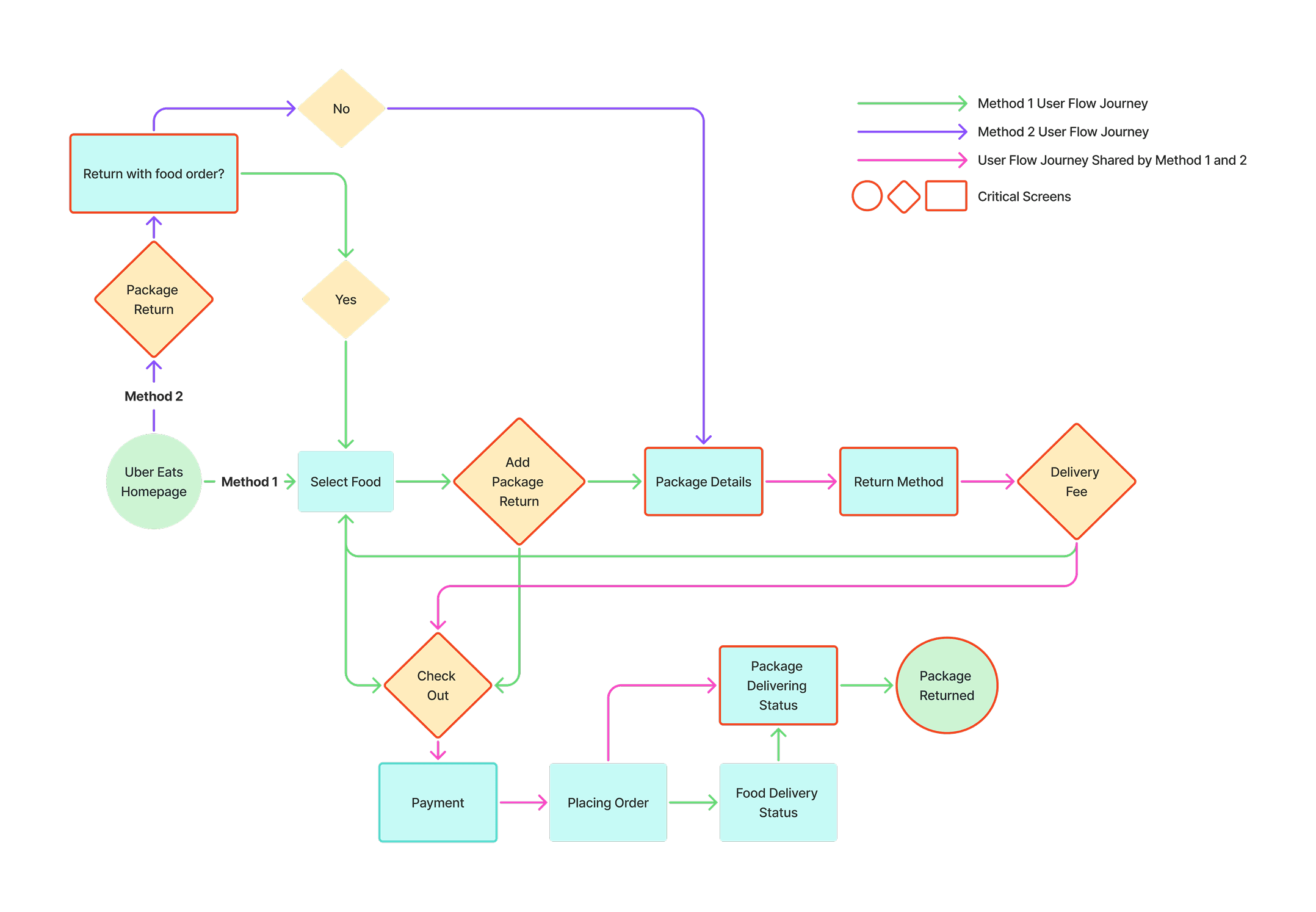
USER FLOW
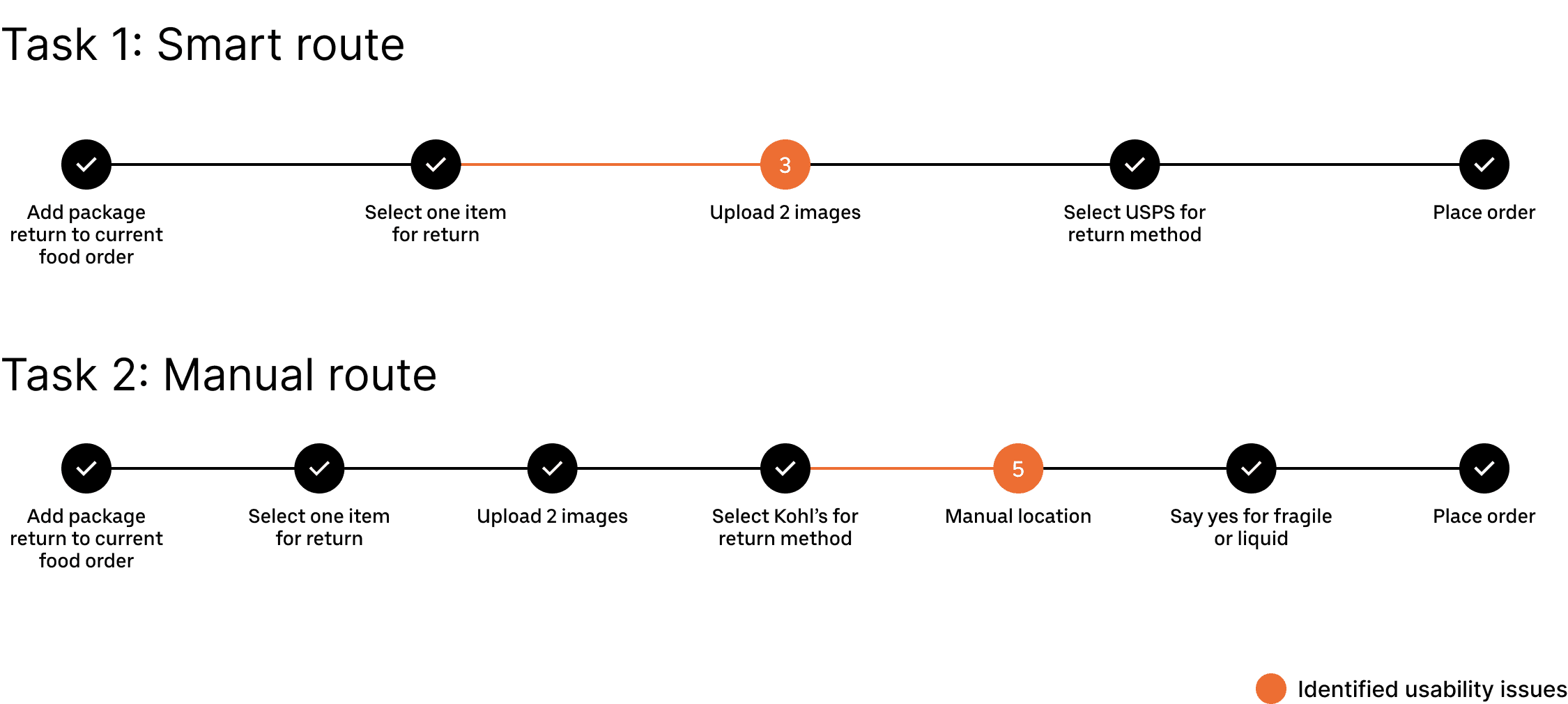
USER TESTING
Seeing confusion, hesitation, and information gaps
Tested with three target users, each completing two tasks to observe natural navigation through the flow.
FEEDBACKS & ITERATIONS
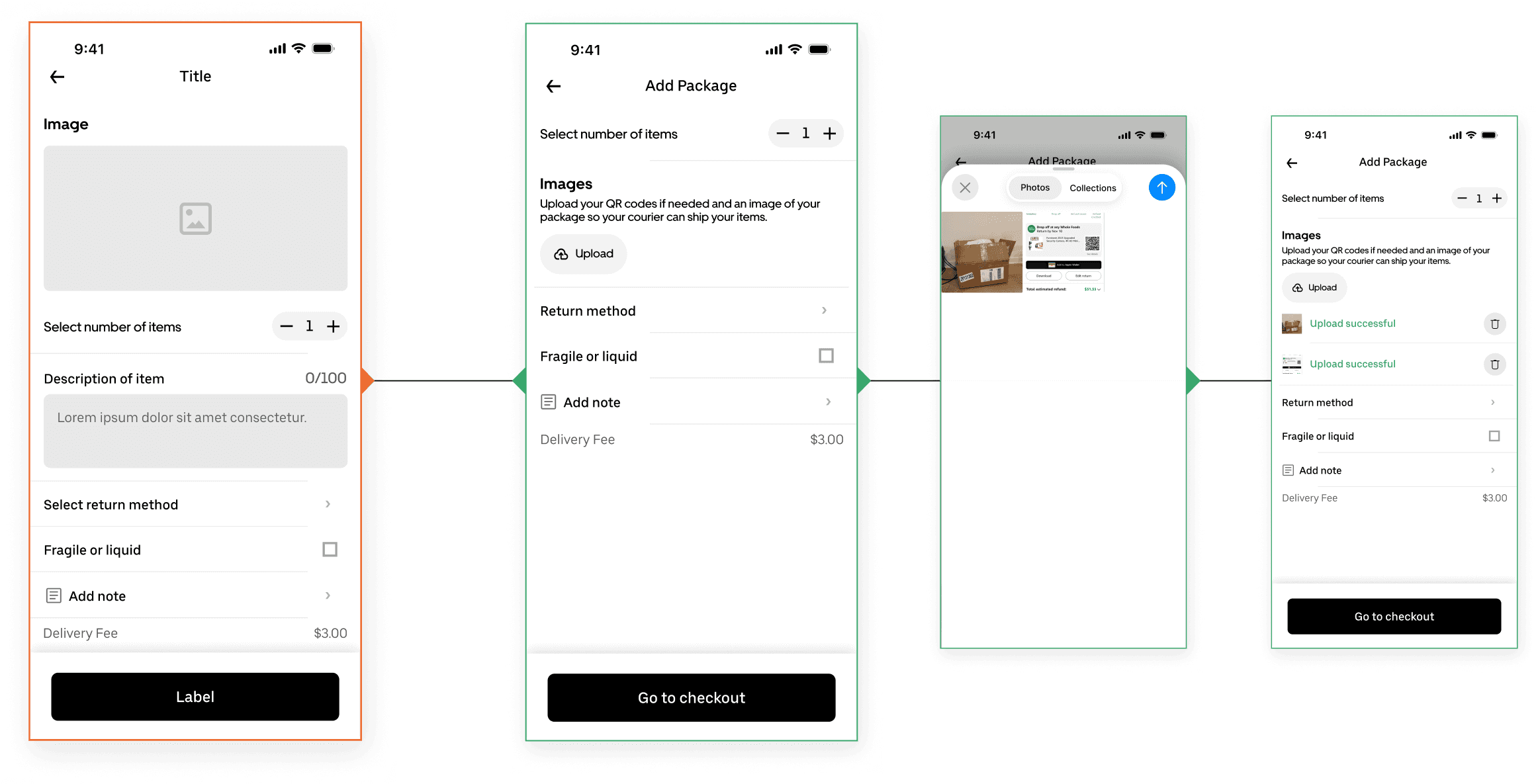
Image upload clarity and efficiency
User testing revealed hesitations during image uploads and suggestions to reduce visual weight above the fold. In response, I reiterated the layout to improve information hierarchy and added confirmation feedback with visible previews to create a smoother, more confident upload experience.
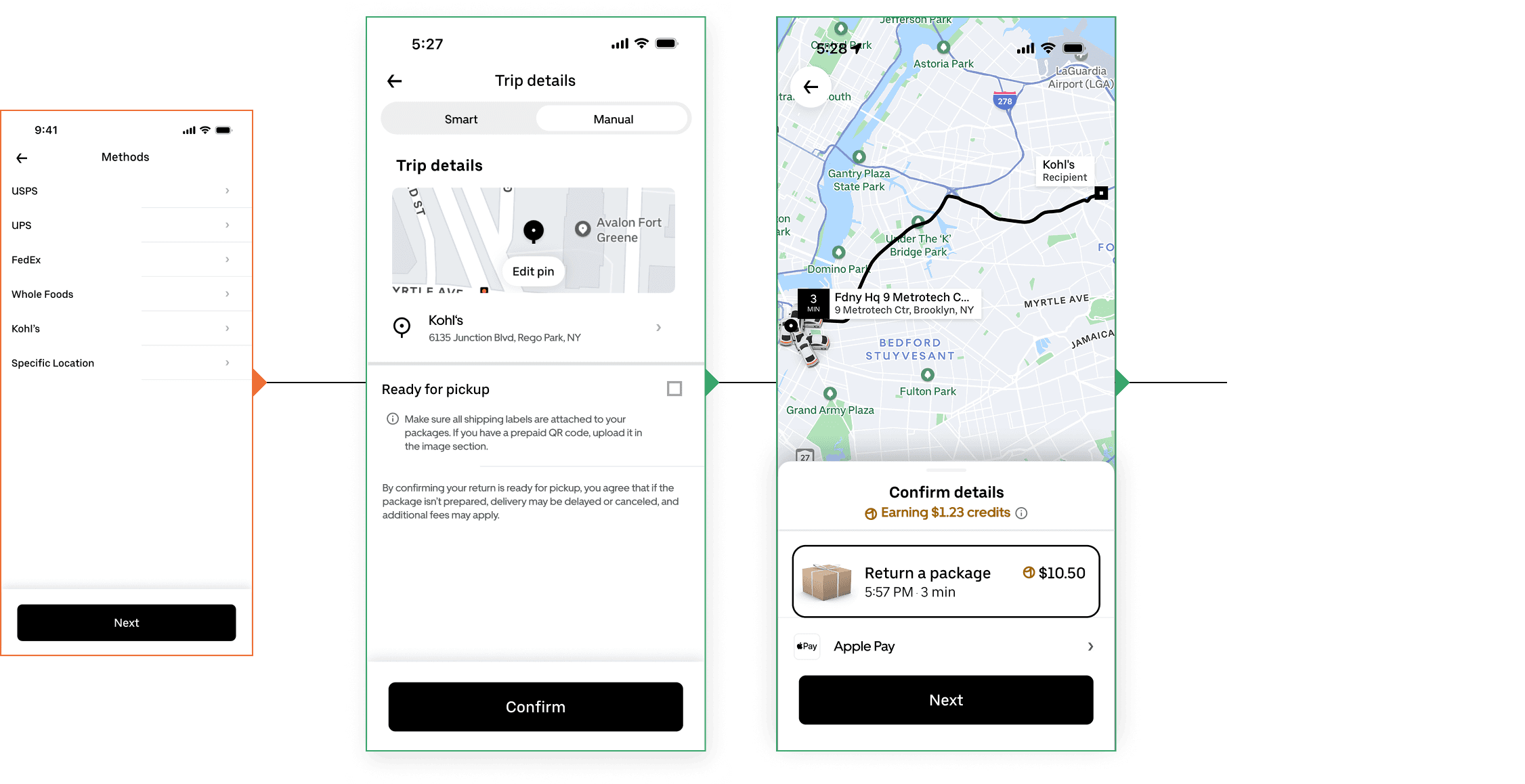
Manual Location Price Confirmation
Manually setting a return location introduced uncertainty around cost expectations. To support user control and transparency, I added a price confirmation screen that clearly communicates potential price adjustments based on distance and courier convenience before submission.
REFLECTION
Designing within two ecosystems taught me to be precise yet flexible.
Working with Uber’s Base Design System and Amazon’s IAP Guidelines helped me understand how large-scale brands maintain consistency across products. It strengthened my attention to detail and adaptability as a designer working within defined systems.
Testing revealed what pixels can’t.
Every moment of user hesitation became insight, guiding clearer flows and more human interactions.
Designing for impact = designing for reality.
What truly excited me about this project was the challenge of making sure the concept worked in the real world—across systems, couriers, and user habits. It pushed me to think not just like a UX/UI designer, but also like a product manager.
